Reviving a Living Relic
I keep a folder of blog ideas. Things that worm around in my brain and tickle neurons in ways that are hard to ignore. Some of them become posts, some of them are deleted months later, still others fester until I can't ignore them any longer. Originally, this was a granular breakdown of balance changes I'd like to see in the wake of the original Guild Wars being repackaged as Guild Wars Reforged. Since then, developments!
At time of original writing, the only balance update since September 13, 2012 was a brief patch-up in the wake of the 15th Anniversary update on April 22nd, 2020 (which had added a new elite skill for each profession). At present, Guild Wars just received its first meaningful balance patch in just shy of fifteen years. It includes a significant number of numbers changes, all buffs, to skills across every profession (class) targeted at expanding the pool of viable skills without reducing build variety. Significant skilltype-wide reworks to Ranger's Nature Rituals was something I'd hoped for in the draft of my original change wishlist and are present here. Incredibly, this balance pass was also conducted by Isaiah "Izzy" Cartwright, who was the head of Guild Wars's balance team way back in the mid '00s. Real blast from the past. I spent some time with the update checking out the changes and I've enjoyed the revival of some of my favourite niche elite skills and improvements to Ranger's bow skill suite. It's a great patch, and I'm excited for the potential of end game meta changes.
Beyond the quality of the patch, and the specifics of the changes I find myself hoping for when browsing the enormous wealth of skills to find something new to mix up my experience, is the more fundamental question of how to go about changing a twenty year old game that has remained largely static for more than a decade — longer than the game was actively supported. Unlike in the case of games like Oldschool Runescape and World of Warcraft Classic, the situation is different in a significant way: Guild Wars has never left. In 2012, when it was impossible to play the 2007 version of Runescape that eventually became Oldschool and Vanilla World of Warcraft was played exclusively through janky private servers with the longevity of a lightning bolt, Guild Wars was winding down as its sequel got ready for launch. It hadn't received a new expansion in five years. But unlike Runescape and World of Warcraft, Guild Wars 2 was a fully independent new game and Guild Wars would continue in maintenance mode into the future. As Guild Wars was designed with the immense network design experience of the brains behind Battle.net — a service that prophesized the modern technology sector at large way back in the '90s — who founded Arenanet (hence the name), it was incredibly cheap to run and stable as a rock. Since its original launch, Guild Wars has had less downtime than most games have in any given year, and Game Director Dr. Stephen Clarke-Willson has very proudly explained to the community that its incredibly forward looking backend has meant that it continues to be profitable even prior to the Reforged boost. Quite a contrast to Oldschool's public polling and Warcraft's "you think you do..." origins.
All this is to say, Guild Wars is in the unique position of having a continuous genealogy on the same codebase dating back to its original release back in 2005. There has been no break as there was between Runescape 2 and Runescape 3, or between World of Warcraft and World of Warcraft: The Burning Crusade, and this begs the question: how do you change a game that is also a living historical artifact?
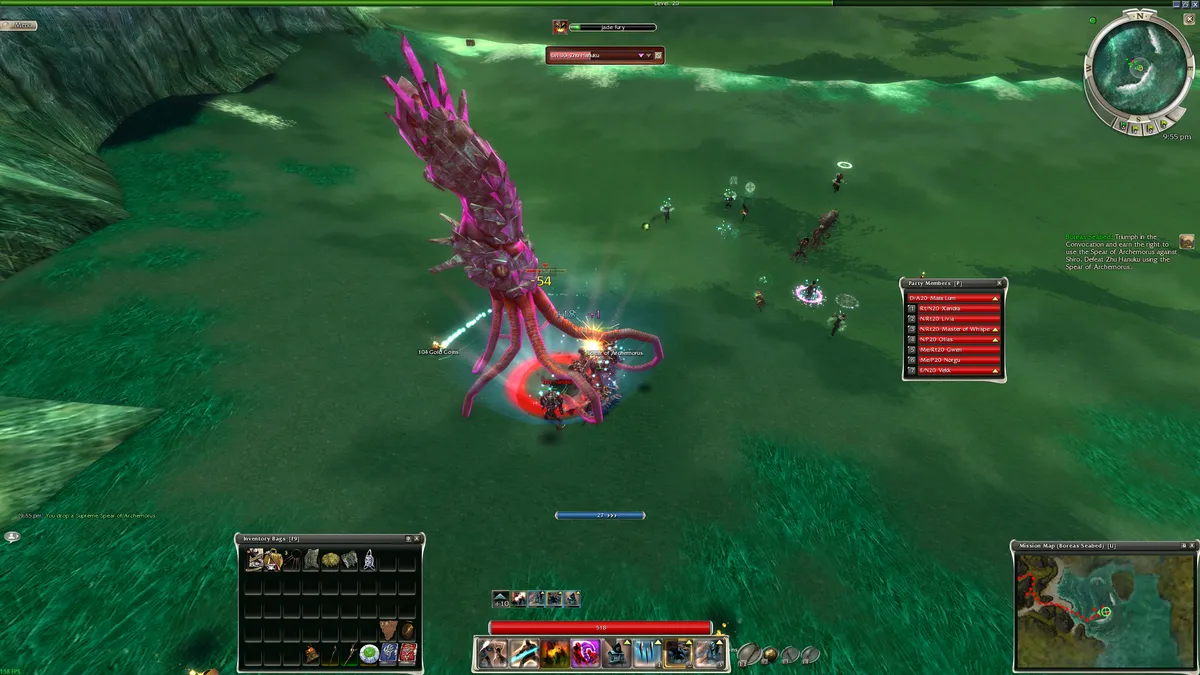
Remastering in situ
Guild Wars balance is a bit more nuanced than most of its MMO kin. In Albion, World of Warcraft, Final Fantasy XIV, its sequel Guild Wars 2, and most other skill bar/tab-target based MMOs, if the balance team wants to give a player skill a 5% damage buff, they can do so in a vacuum. There may be balance implications in unforeseen ways (say, buffing a DPS class's offhealing abilities leading to 5 man groups not bringing dedicated healers), but each skill is mostly its own entity and exists only within the scope of that class. In Guild Wars, not so much. For two reasons.
First is that classes are malleable. If you decide to roll a Ranger, one would reasonably surmise it plays similarly to World of Warcraft's Hunter class. In Guild Wars 2, they often do. However, in Guild Wars — where each character has both a Primary and Secondary profession — the most popular Ranger builds play more like the World of Warcraft Rogue. Those builds borrow the evasiveness and daggers from the Assassin class, mix it with the Ranger's innate energy efficiency, and use that to play a powerful melee frontliner rather than the bow-wielding backliner the class fantasy suggests. A primary Ranger could also borrow the healing skills of the Ritualist or the magic of the Elementalist to fulfill healing, tanking, or backline caster DPS roles as well. There are very few hard lines.
The second reason is more interesting. Like many of the table top games that inspired early MMOs, Guild Wars uses a symmetrical skill system for both players and NPCs. Every NPC in the game has attributes just as player classes do, use the same pool of skills that players use (with some additional 'monster skills' for abilities too powerful or unthematic for human players), and thus is also beholden to balance changes targeted at players. Indeed, some of the skills that players immediately remarked upon in this new balance patch are skills like Famine, which punishes running out of energy, and Mark of Protection, which heals based on incoming damage, that are used by particularly annoying groups of NPC enemies. Mark of Protection in particular already could slow some encounters down to a crawl if using low damage builds or low level characters, and that was when the skill was considered entirely unviable for human players to use themselves. Now those enemies will be even more powerful.
This helps to explain part of why Guild Wars has received so little balance attention for so long. From developer interviews regarding Reforged, it's clear that the devtime required to actually do these things was never insurmountable, but rather the expertise was difficult to come by and therefore it was a tricky thing to tackle on a tertiary (if we're being generous) project at Arenanet. Now, with Reforged bringing in many new players and a clear pivot towards a more active long term support strategy from within the company, the question becomes less one of resources and more one of finesse. This patch indicates they're reticent to nerf existing powerhouse builds (anyone who's played the game for long could tell you the skills and builds that are the most heinous power outliers, all of which remained untouched), but happy to buff unused skills. But due to Guild Wars's symmetrical system the issue becomes: is having a skill like Mark of Protection be so powerful that players consider using it actually good for the game?
Further still, the question of whether it ought to be a priority to maintain a Guild Wars that feels like the Guild Wars of 2012 (let alone 2007). One of the appeals of older MMOs is the feeling that the things you remember are still there, waiting for you. As Runescape 3 looks to rehabilitate their game and image, they've put a lot of emphasis into bringing clarity back to the new player experience. One of the first things they've done to that end is to start new players on Tutorial Island, a nostalgic tutorial that has been an iconic introduction to Runescape sporadically replaced and reintroduced since its incarnation. This is done not because it's a better tutorial than that of Burthorpe or any other of Runescape 3's attempts at new introductions, but because it's familiar and nostalgic — even to players who only know the game through osmosis. In Guild Wars, this familiarity comes largely through its skills.
The most classic example of this might be the "Wammo", a community term for Warrior/Monk characters that are closely associated with new players who haven't yet learned good Guild Wars buildcraft sensibilities. It's similar to the associations of Lifegain in Magic the Gathering or Hunters rolling need on strength melee weapons in World of Warcraft. If the Wammo were to change fundamentally, would that undermine Guild Wars as a nostalgic museum? I'm not sure it would, but I do think that line of thinking will be sufficient to make Arenanet cautious with any sweeping reworks that go beyond simple numerical changes. If a player returns to a ten (or twenty) year old favourite and feels lost playing their favourite class, that can be alienating experience and something a game that has been static for so long like Guild Wars may find damaging. Time will tell if Arenanet braves those waters, but I suspect they won't.
As Oldschool has laid much of the groundwork for the retro MMO revival, and Blizzard continues to fumble about trying to find the perfect direction for Classic, Guild Wars will be an interesting case study in updating an older live game.1
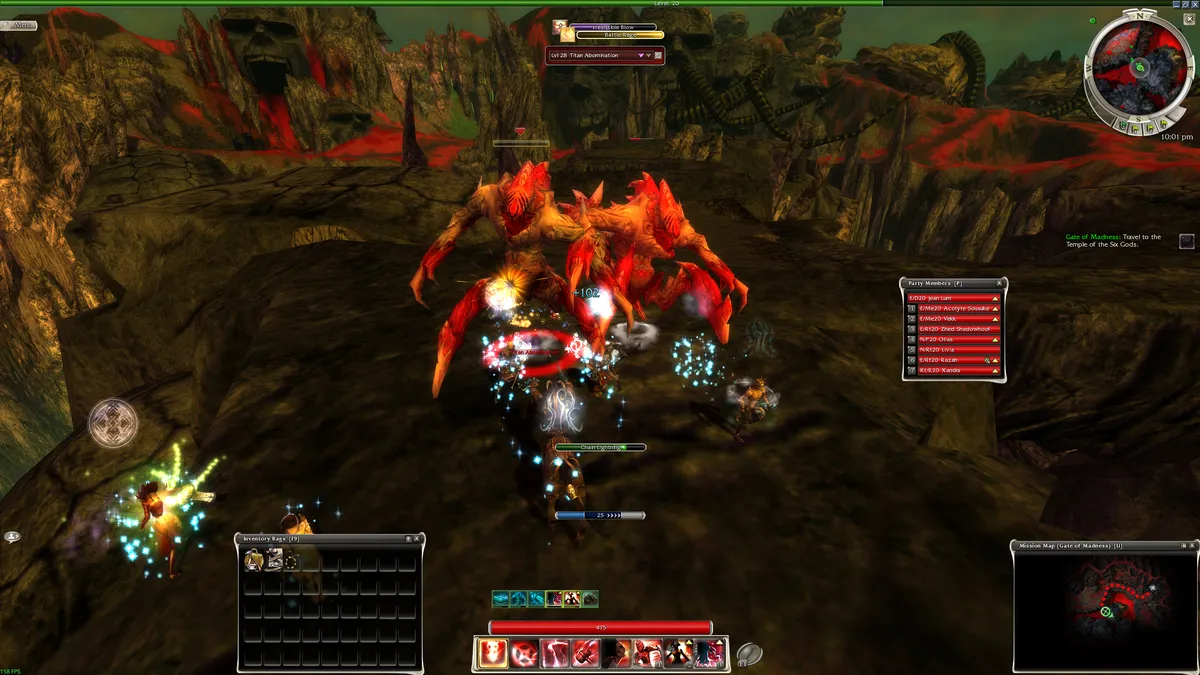
The good, the jank, and the unplayable
Wrapping things up, now that the flood gates are open I do want to spend a bit of time considering the things I would most like to see updated. I have three major hopes: first, reworks and improvements to NPC ally AI; second, a holistic rework to Ranger's Preparation skills; and finally sweeping nerfs to PvE skills that are major power outliers to the point of eclipsing other options. All of these changes would have broad implications on the end game and campaign metagames, and hopefully improve the diversity of options available to move the game away from the teambuilds that have dominated for the last fifteen years — a martial player that usually abuses one of the most powerful PvE skills, and a caster backline.
The most broadly applicable change would be to NPC ally AI, and there are a few specific things in need of improvement. Most importantly would be improving the melee attack targeting AI. This is a strange quirk of Guild Wars AI wherein melee characters pause to take a moment to process between the act of running up to their target and actually hitting their target. This applies to melee heroes (NPC player-like allies), but it's also noticeable with Ranger pets and Necromancer minions and is frustrating all around. To compensate for this, the playerbase has largely refused to use melee pets and has avoided melee heroes in favour of casters. When you do use a melee hero or a Ranger pet, you equip them with teleport abilities that reduce their downtime. Improving this issue would go a long way to make these builds more powerful and fun. Secondarily, skill selection for melee heroes in particular (especially with Daggers) could use some improvements and anything that improves the ally AI for using utility skills to reduce downtime and get players back in the action without micromanagement would be appreciated.
Rangers already received improvements to their Nature Rituals (as I noted above) to improve their uptime and reduce the tedium of resumonning them. Unfortunately, while Nature Rituals are far and way one of the most useless skill types in the game and these changes were sorely needed, Rangers have an entire second skill type that has the same issue: Preparations. Preparations are long cast time self-buffs that typically add some sort of bow-related buff. This ranges from splash damage on hit, to lacing arrows with poison, to improving arrow speed and damage. Unfortunately, Preparations are riddled with numerical issues that ruin their viability on the whole. They usually have moderate recharge speeds that punish deaths and interruptions when casting disproportionately, they take two seconds to cast (as opposed to, for example, the Dervish equivalent of Flash Enchantments being instant), and they generally only last 10-30 seconds, which is about half the duration of a small encounter in Guild Wars. This means you are all but guaranteed to have some six seconds of downtime in every encounter for builds that rely on Preparations. It's not ideal. I'd like to see either an enormous buff to duration, a reduction in cast time, or a more substantial rework to improve uptime such as changing them from duration-based to a number of attacks before expiring. Further, many Preparations are overly narrow as they only impact bow attacks. Expanding this to all martial weapons for many of these skills would improve the utility of Ranger as a profession when mixed with others.
Perhaps the most impactful ratio of scope to metagame impact would be nerfs to PvE skills. I've mentioned them before, but PvE skills are essentially player-exclusive (cannot be used by NPCs) skills that aren't usable in PvP, and are limited to three per player. Some of these were added with the original expansions but others were added with the 15th Anniversary update, and many of them are enormously powerful. I'd like to see some of the most generically powerful PvE skills nerfed to allow for other skills to shine. Most notably these are "Together as One!", Heroic Refrain, and Soul Taker are the three most powerful elite skills in the game and while Soul Taker has created a new (and very broken) build archetype for the Necromancer, "Together as One!" and Heroic Refrain have both effectively replaced every other Ranger and Paragon elite skill in the game. There is no reason not to take one of these unless you are actively choosing to nerf yourself or are already brought by a player teammate. Other PvE skills like Dwarven Stability, Drunken Master, and Ebon Vanguard Assassin Support among others could probably use minor number nerfs as they mostly replace profession-specific skills with generic options, leading to genericized build choice.
All said, I love Guild Wars. It is one of my favourite games of all time, and seeing it have new life breathed into it in its tender years is a joy. If you're someone who enjoys build craft in MMOs, deckbuilders, or just likes old weird RPGs from the beforetimes, I cannot recommend it highly enough. Most folks play entirely solo these days, though there are also dedicated guilds of veteran and new players to join and make friends. All signs indicate that Guild Wars has a bright future and the reforging has only just begun, so come and find the skills that make you giddy and then tell me your hot take for which skills need reworking.
Side note, I'm aware other MMOs have done the same or have had extremely long term support like EverQuest and Final Fantasy XI, but I'm ignorant of those cases hence not including them.↩