Pokémon the Dungeon Crawler
Pokémon is something of an autonomous force these days. It's the largest IP in the world, and essentially everything it does will be met with the loud cheers of fans the world over. This is especially true in the case of its mainline games, which have changed enormously over the years but consistently sold millions (often tens of millions!) of copies. Increasingly, the series has leaned into narrative and online play with features such as raids and even coop while changing its level design foci away from the traditional JRPG design of its early years towards paradigms of narrative-first set pieces or open world sandboxes — echoing the trends of the RPG genre at large. While these new directions for the series have their origins in the early entries, there has been a steep decline in dungeonous level design that's worth looking back on.
Pokemon's move toward narrative and open-world has de-emphasized the gameplay of its levels. The days of labyrinthine levels that wind between webs of interconnected passages are done, with Black 2 and White 2 in 2012 being the last hurrah. This change has gone largely unremarked upon, however, as the paradigm shift has happened gradually enough and alongside other, more obvious changes in foci as well as features that players considered "quality of life" (always a contentious phrase) improvements such as the removal of HMs. Pokémon also traditionally has avoided the binds of its JRPG genre by pure force of ubiquity. Players who do not play (other) JRPGs play Pokémon, and therefore discussing JRPG design trends within the context of Pokémon often leads to confusion. Pokémon has so successfully exfiltrated itself from the genre confines that I've even heard people who consider themselves Pokémon fans claim they don't play games with turn based combat. The doublethink is strong.
This JRPG-blindness among Pokémon fans has also led to a blindness in how they conceive of level design. For one, very few think of Pokémon levels in terms of "dungeons" despite this being the typical nomenclature for large winding levels that are so common in JRPGs. Of course, not thinking of Pokémon in these terms means there is a hole in understanding the series change over time, especially in places where it adhered closely to genre conventions like its dungeon design, "loot" structure, and the like. This article will look back on the history of Pokémon level design and consider the changes that have redefined the series in the modern era.
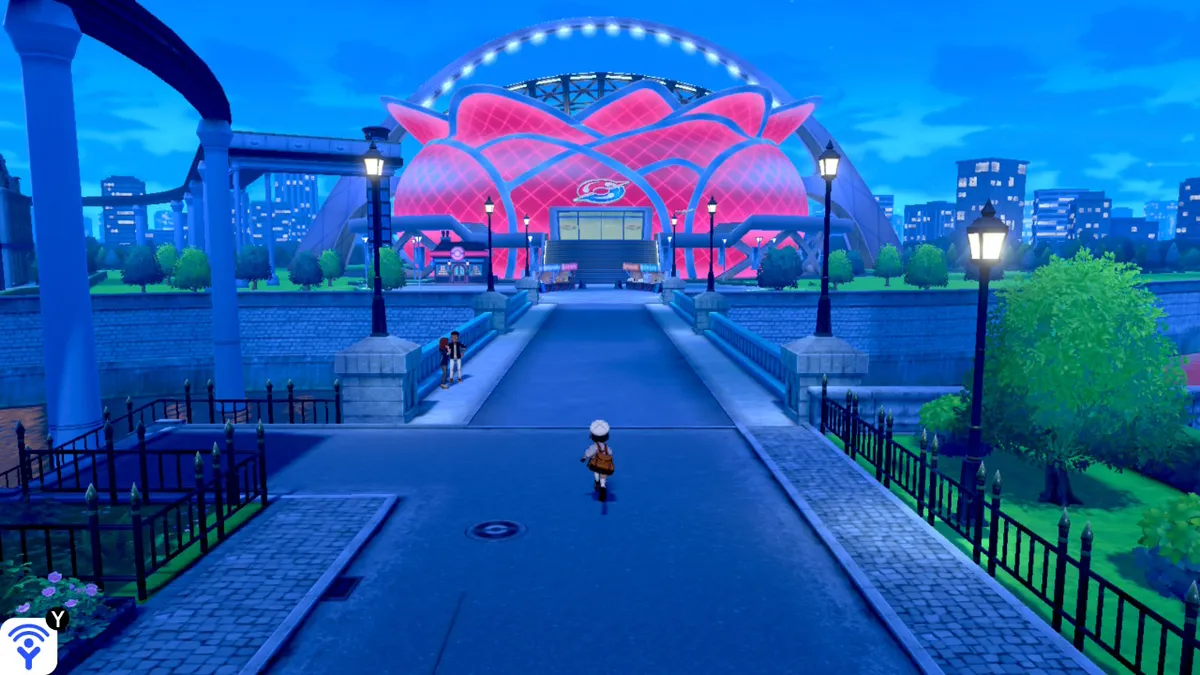
A World of Winding Paths
Pokémon's relationship with dungeons broadly starts strong and tapers off with time. The original Red, Blue and Yellow (RBY) have have crucial dungeon segments as part of their progressively unlocking region of Kanto. You work your way east through Mt. Moon, which begins as an open area and then narrows as you uncover the work of Team Rocket, eventually rewarding you with a fossil. Yellow even introduced a bossfight at the end in the form of Jessie and James. To find your way around the guarded gates bordering Saffron City and cutting you off from the center of Kanto, you traverse Rock Tunnel which introduces the soft barrier of darkness, optionally solved through HM05 Flash. There's also the surprisingly forward-looking Cinnabar Mansion, which anticipates the vibes of some of my favourite dungeons in Atlus's urban fantasy games ten, twenty, even thirty years later. RBY even includes a post game optional dungeon in the form of Cerulean Cave, where you'll find the optional end boss Mewtwo, and two optional late game dungeons in the Power Plant (Zapdos) and the Seafoam Islands (Articuno).
Gold, Silver and Crystal (GSC) build on this structure while leaning more heavily into optional dungeons with distinct rewards. Where Mt. Moon, Rock Tunnel and Cinnabar Mansion are strictly required to progress, GSC's Johto allows players to choose how heavily they interact with its most intense dungeons. Areas like Dark Cave and Slowpoke Well are introduced to players organically on the required path but delving deeper grants the optional rewards of Teddiursa, Dunsparce, and Lapras among the odd TM. Mount Mortar offers a midgame optional dungeon that players might choose to traverse to access northeastern Johto and has Tyrogue as the reward.
GSC also includes a number of required dungeons such as the Rocket Hideout in Mahogany Town, the Lighthouse in Olivine, the Burnt Tower in Ecruteak, and the Ice Cave but these are typically rather short and sweet and focus on strong concept akin to RBY's Cinnabar Mansion. In essence GSC introduces more individual dungeons, but requires players to traverse a smaller section of each dungeon to progress. To compensate, GSC has larger optional dungeons with distinct bosses in the form of the Whirl Island (Lugia), Tin Tower (Ho-oh), and Mt. Silver (Red). This design is what the series would adhere to for many years to come, and GSC's emphasis on giving players the agency to choose how much dungeon crawling they want to do is something that Pokémon has excelled at over the years. However, while GSC was so successful at leading players towards these dungeons with Pokémon unique to them, there's been great player-pressure to expand the access of Pokémon to players, pushing Game Freak away from using Pokémon themselves as the carrots for dungeons.
Ruby, Sapphire and Emerald (RSE) already begin to move away from the pokémon-based bosses and rewards towards more traditional JRPG boss fights. While RBY and GSC both use NPC boss fights with their antagonist Team Rocket alongside the dungeons with exclusive pokémon, RSE is a more narrative oriented game with a more structured plot that lends itself to using trainer NPCs more frequently. While there are still dungeons that include unique Pokémon rewards like Granite Cave (Nosepass) and Shoal Cave (Snorunt), much of the dungeon design in RSE goes towards required narratively-pertinent areas such as the Aqua/Magma Hideouts and Seafloor Cavern where you fight the higher ups your version's criminal organization (or both in the case of Emerald).
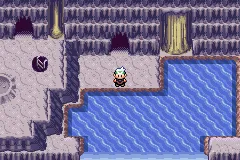
That said, RSE does build on the formula by using the Gameboy Advance's more powerful hardware to build larger, more dungeon-esque routes. The forested routes surrounding Foretree City, and the enormous water routes in the south of the region both serve a similar role to traditional enclosed dungeons as they offer a large number of secrets and trainers. The water routes even include the Abandoned Ship and Sealed Chamber, both of which serve as rewards for exploration with the Ship being the subject of a sidequest that unlocks Clamperl's evolution items and Sealed Chamber unlocking the three legendary Regis. Emerald introduces an NPC bossfight (Steven) at the end of Meteor Falls, which was previously a late-game dungeon that rewarded Bagon and the TM for Dragon Claw, expanding on RS's pattern of using NPC bossfights rather than Pokemon rewards in its dungeons. Emerald also notably expands on RS's Battle Tower into an entire Battle Frontier, which itself includes the Battle Pyramid and Battle Pike, both of which play with dungeon design concepts within an endgame battle-focused area.
Diamond, Pearl and Platinum (DPPt) largely continued the design of RSE without much iteration. It continues to use archenemy NPCs as the primary bosses of its dungeons, it introduces a post-game area with an end-game dungeons (and the Battle Frontier in Platinum), and it has a selection of winding routes with lots of optional areas. It introduces NPC allies in areas like Eterna Forest and Iron Island which create a fun new dynamic for some dungeon areas, and it has a large central dungeon that you gradually explore more of throughout the game with Mt. Coronet, but otherwise DPPt is pretty iterative.
Before the next mainline titles released, however, we got Heart Gold and Soul Silver (HGSS) — remakes of GSC — which are a strong point of contrast in how the series developed in its first four generations. Where GSC uses pokémon as the carrot to pull players into its optional areas, HGSS misunderstands and undoes much of that careful design by introducing the Safari Zone. Unlocked before the seventh gym battle, the Johto Safari Zone gives players the opportunity to catch an enormous number of pokémon that were previously exclusive to optional dungeons and late game areas. Larvitar, Murkrow, Magmar, Cubone, Smeargle, Misdreavus, Lapras, Lickitung, Kangaskhan, Ditto, and others are all available trivially in this area. Where GSC had carefully distributed pokémon to each nook and cranny Game Freak's level designers had created, HGSS takes all of those pokémon and puts them in one singular area made up of distinct biome squares with little personality and minimal level design effort, in the name of diversity and convenience. It's a transparent effort to give players something they regularly ask for (greater access to diverse pokémon) but fails to understand the reason why the designers of yesteryear chose not to do so. This pattern of remakes undoing key level design concepts will continue (Ooh! Foreshadowing!).
Black and White and its sequels Black 2 and White 2 (BW2) see DPPt's conservatism and explodes it, instead pulling the series back towards its JRPG roots and developing a frankly ludicrous amount of dungeonous levels. BW2 may be the last hurrah of this style of level design, but is so rich with strong route and dungeon design, both required and optional, that it is also the pinnacle and holds up as the strongest JRPG in the series, and one of the best JRPGs in the highly competitive Nintendo DS ecosystem.
BW2's dungeons range from the looping paths of Pinwheel Forest and cavernous depths of Chargestone Cave, which are very well executed iterations on the design of Eterna Forest and Mt. Coronet, to the open areas rich with secrets like the streets of Route 4 and the RSE-inspired rapids of Route 17. Unova is is densely packed with optional areas and secrets that it's impossible to cover all of them, but it consistently pulls the best ideas from its forebears and executes them fantastically. Even more experimental concepts like the Battle Pyramid from Emerald reappear in the form of the Abyssal Ruins, which offers players the opportunity to make tons of cash by traversing a confusing and dark underwater maze while racing to beat a timer. It's a greatest hits collection of Pokémon's best level design and it's the reason I come back to these games more than any other generation.
The Death of Dungeons
Following Black 2 and White 2, Pokémon entered the modern era with its first fully 3D entries, X and Y (XY) and with the greater fidelity came a number of changes in how the series was designed. 3D environments lend themselves better to cutscenes with dynamic camera shots, and the need for 3D models for assets means creating huge numbers of diverse environs (on top of having to create models for every pokémon to date) is a large development burden for the series. The new visual identity and console (now on 3DS) made XY a great opportunity to reinvent the series for a new generation of player, and that's what Game Freak did. XY is more focused on its narrative and characters than ever before, introduces routes with dynamic camera shots that serve less as levels and more as introductions to new story-relevant areas, and uses its few dungeons to execute on new design ideas that wouldn't have worked in 2D (like the mirror-walled Reflection Cave or the over-the-shoulder perspective Glittering Cave).
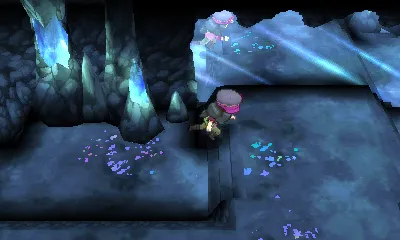
While XY was reinventing the visual identity of the series, its largest contribution was less about its level design (though it does cut down enormously on large dungeons), and more in its emphasis on online features. These online features, which enabled an online battle ladder and the options to trade with a random person for a random pokémon among other things, propelled one of the largest changes to the series: the move from singleplayer post- or end-game dungeons and challenge areas, towards online features to increase player interest long-term. XY has very little postgame to speak of, and what is there serves largely as convenience for rounding out your collection or practicing for online battles. This deemphasis on post-game content is one of the biggest contributors to the lack of dungeon content, given so much of the quality levels from previous games were in very high level areas that store legendary pokémon or secret bosses.
XY was immediately followed by Omega Ruby and Alpha Sapphire (ORAS), HGSS-like remakes of Ruby and Sapphire that overlay RSE's original level design with XY's new 3D design sensibilities. The result is design that seems simultaneously to embrace the dungeons of yesteryear while being absolutely horrified of pushing players into them. As discussed before, RSE was the big on NPC bosses in story dungeons, but it also leaned heavily on (often small) optional dungeons that were introduced to the player incidentally by forcing the player to backtrack to earlier areas — which were only accessible through one of multiple optional areas. While not every backtracking path took the player through dungeons, Hoenn learned the lesson from Johto that by placing dungeons near the player's necessary path, it invites players into them. ORAS misunderstands this principal to the detriment of the game's pacing and sense of exploration.
The most obvious example of this is orbits around the fifth gym, which asks players to return from the north of Hoenn back to Petalburg City, a small town they'd passed through at the very beginning of their journey. It's a cool little victory lap heading back to face the gym leader, who also happens to be the player character's father. There are a few routes to get back that are seeded throughout the game to that point. The player will have helped sea captain Mr. Briney by rescuing his pokémon from a Team Aqua or Team Magma agent in Rusturf Tunnel after the first gym badge. The tunnel was previously blockaded by smashable rocks, which the player earns the ability to smash after the third gym. The other option is to return to Fallarbor Town and descend into Meteor Falls, where the player had previously rescued Professor Cozmo, a local scientist, from Team Aqua or Magma.
Once the player defeats their father and earns the fifth gym badge, they're immediately rewarded with Surf and asked to traverse their way back towards the center of Hoenn, where they are now able to traverse the water that serves as a barrier between the eastern portion of Hornn and the western portion. To do so, the player is again given a number of options on how they'd like to navigate back. By taking the ocean routes they'd previously traversed on Mr. Briney's boats towards the south, the player is given the opportunity to revisit the optional portion of Granite Cave — an early game dungeon near the second gym — and the Abandoned Ship, which is not yet fully accessible but offers the coveted TM for Ice Beam. They might also take Route 103, which is a more direct route back and takes the player near the Trick House, an optional 8-level puzzle dungeon that unlocks a new level each time you beat a gym. They could also take the route back through Meteor Falls, which has more optional areas both inside and outside unlocked by acquiring Surf. It's a classic metroidvania-esque web of unlocking "keys" that give the player the opportunity to make low stakes but potentially impactful decisions on their exploration of Hoenn.
Thing is, everything I've just described is true of RSE. In ORAS, the player is unceremoniously teleported via a fade to black back to Petalburg by an NPC after defeated the fourth gym. After defeating the fifth gym, another NPC teleports them in the same fashion to the city nearest western Hoenn. There is no backtracking, nor is there a natural prompt for exploration. Curious players could refuse the prompts and navigate themselves, but most will not and the option undoes the careful seeding of player curiosity that the backtracking prompts to blossom. ORAS has its highlights, but this deliberate destruction of exploration is a serious strike against the title as someone who enjoys the now aged level design paradigms.
After ORAS, Pokémon has consistently maintained two styles of area design. The first is a development on what XY started, with routes and caverns being very self contained segments that push push players very heavily on a scenic path towards their next major stop, and the other is wide open areas without many environmental features, usually using some sort of traversal gimmick like riding a pokémon. These two paradigms work well within their niches, the former creating a highly curated sense of place and atmosphere, and the second giving players the opportunity to catch a ton of pokémon varieties without needing to design a huge number of routes. Other smaller ideas see execution as one-off story sections like gyms or Sun and Moon's trials, but they are the exception that proves the rule. These designs are perfectly functional, and they have their place, but they also have taken the place of dungeons in ways that are often unfortunate.
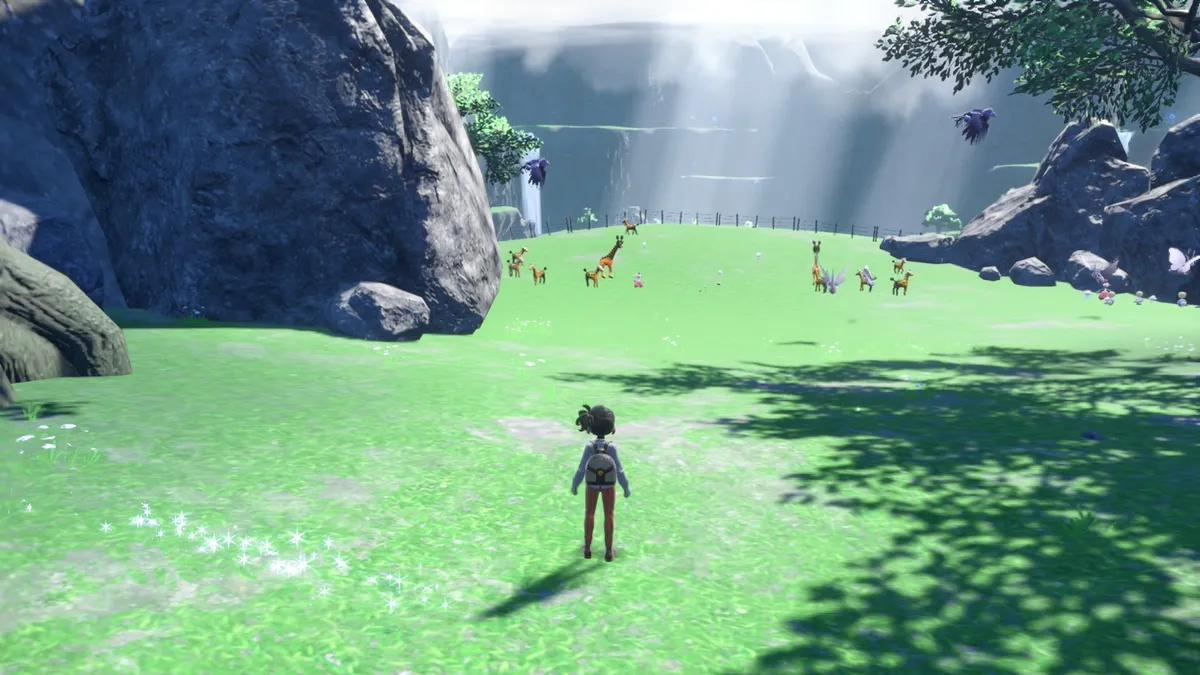
For one the lack of dungeons has created a design feedback loop with how pokémon are distributed. Players want more pokémon to be accessible, but the lack of optional dungeons has reduced the number of clear demarcated boundaries where rare and coveted pokémon can be squirreled away, which has forced more pokémon to be placed in these open areas, which has soured players on anything that might make pokémon harder to find, and the pattern continues. While this arguably began with the HGSS Safari Zone, it has resulted in Pokémon's open-world design having enormous fields with absurd numbers of pokémon, reducing the novelty of any given variety.
The continued emphasis on online features (which has expanded to coop exploration and challenges such as raid) has also cemented the move away from post-game dungeons towards relying on online ladders and coop. When Diamond and Pearl received remakes, they were outsourced, almost 1:1 in level design, but did not integrate Platinum's addition of the Battle Frontier. Sword and Shield as well as the most recent entries Scarlet and Violet introduced DLC that serves as late-game areas, but they largely continue to design principles of the base game and while they're an improvement in quality, they don't challenge the paradigm.
Pokémon's declension (in my view) into a game for collectors and online battlers, has undone its value as a game for JRPG fans. In Pokémon's infancy, its "Gotta Catch 'Em All" motto spoke to a series that wanted players to come together to share their collections and experiences. However, as Pokémon gradually shaved way its more complex level design, it has cut off one of the most crucial ways that players develop ownership of their experience: choosing where to explore. A Crystal player who spends time exploring Dark Cave and Mt. Mortar is going to have a very different experience from someone who gets lost in the Whirl Islands, and that's a good thing. It makes it more likely that players encounter different pokémon on their journey, and it encourages memorable moments as fans share the different areas they found and what others missed. That motto has now been retired, catching every pokémon is easier than ever, and online features have have replaced end game singleplayer content. Pokémon no longer facilitates organic social experiences through clever level design, just comparing the minutia of each other's favorite critters or grinding a ladder. If you enjoy shiny hunting or VGC, more power to you. If you love the character writing, I'm happy for you. But I do wish the series had maintained more of its level design roots.
Thanks to Spin for generously letting me use his Switch screenshots!