October ‘25 Steam NextFest Demos
The Trends
This month’s NextFest had a much broader selection of games than the last one I engaged with heavily. There are still some clear trends, but I’m pleasantly surprised by the diversity of art, gameplay, and country of origin this go around.
As one would expect, the most common genres represented are roguelikes, metroidvanias, virtual novels, and top-down strategy games. All of these are long time indie darlings that are practical to make with small teams, so no real surprises. Within those genres, there are a huge number of Hades-inspired action roguelikes, though much fewer than previous, a shocking number of autobattlers, deckbuilders, and inventory management roguelikes, and then a smattering of city builders, tactics RPGs, VNs, and Vampire Survivor-likes. Unlike previous NextFests, within each of those subgenres we did get a fair bit of variability. In the reviews below, there were only a handful that I’d say clearly occupied the same space, and very few were extremely iterative.
That said, the tribulations of saturated genres mean many of these titles will experience a lot of difficulty reaching broader audiences. I only played a handful of demos that I truly bounced off of immediately or that had fundamental technical issues I couldn’t easily get passed, so it’s a real shame. Most of the demos are still live, so if you like what you read, I’d really encourage you to check them out yourself and wishlist the ones you enjoy.
That said, lets get in to it. 21 demos played and reviewed!
Demo Reviews
Alchemist’s Alcove
Traditional top-down roguelike. Plays as one would expect a turn based dungeon crawler to play, the crafting works well, and the art is supremely legible. This isn’t a genre I consider one of my fortes, despite enjoying it, so it’s hard for me to judge how much the crafting mechanic adds to the system.
In my couple runs, I found the crafting pretty interesting and the associated inventory management is very fun. I always enjoy when a game makes me choose which things I’ll bring when going into an unknown hostile locale, and this executes on that concept extremely well. Hints of higher level areas abound but I struggled to figure out ways to make my character actually stronger, instead just amassing resources in the easier areas until I happened upon something more useful. That’s the natural way with these games, though, so it’s less of a complaint and more an admission that guessing how much I’ll enjoy games like this is hard from a cursory glance.
Alchemist’s Alcove seems like a decent addition to the genre, but that will be contingent upon just how much stuff they can cram in on release.
Birdcage
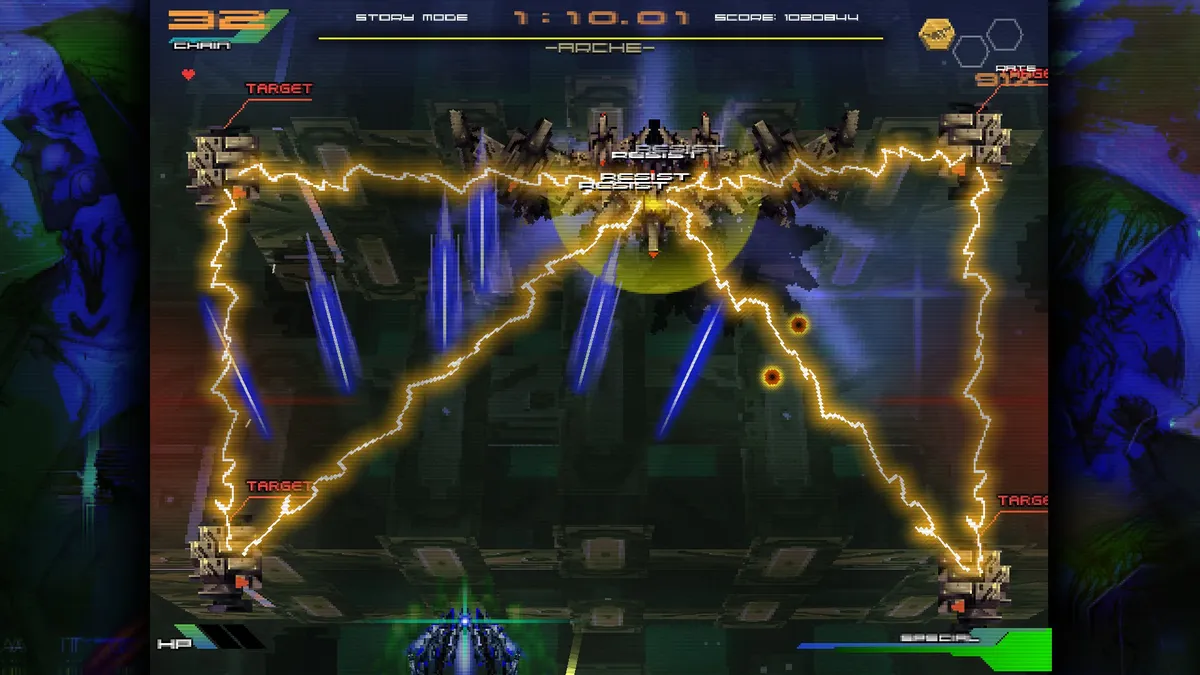 A promising shmup with incredibly stylish graphics and music. Plays like an Eighting or CAVE shmup with influence from Treasure’s Ikaruga adding interesting obstacle courses that create gameplay that can feel more like a puzzle game than a shmup at times. Its art and music also pulls from their era with spacious synths, a well executed scanline filter over low poly and pixel art graphics, and surprisingly well illustrated narrative cutscenes before (and presumably between) levels.
Birdcage’s controls could use a bit of tinkering with changing the ‘narrow’ and ‘wide’ shot options to be usable as hold and tap respectively, and perhaps changing the sword mechanic as currently, it’s very difficult to play on an arcade stick or keyboard since you can’t aim it. That said, many of the gameplay considerations show a great deal of care and understanding of the genre. Quality inclusions such as your ship’s pinpoint hurtbox being highlighted vertically and horizontally, making it easier to intuit where you’re safe, and the enemy patterns and bullets are clearly well considered.
Strong recommend for shmup fans, with the caveat that keyboard and stick players may be irritated by the sword.
Bloomkeeper
I thought this was going to be a new spin on Pikmin, but I think it plays more like a sheep herding game. Your job is, essentially, to coax little seed people into blooming on dying land, bringing it back to life. However, unlike something like Pikmin or a traditional RTS, you don’t have any direct control of the seeds whatsoever, instead you need to use a ‘bark’ command to literally push them around, or pick them up and throw them one at a time. This gameplay loop is that accentuated by the seeds’ tendency to herd together, forming groups that all move in similar directions and accumulate more and more seeds as they spawn in. It’s pretty novel.
The game’s art is gorgeous, and while the music seems like it might get old after a while, it suits the environments. My initial thought was there was a real lack of friction, but the second level in the demo showed they have some ideas for that (seed spawn points that get corrupted, causing new enemy seeds to kill the land you’d rejuvenated if not dealt with, for instance), and it has a nice loop to it.
Not sure it’s for me, but if you look at it and it looks fun, or if you enjoy low key puzzle-y games, I’d give it a try.
Carnedge
Carnedge is a sort of odd mix of an RPG, roguelike, and autobattler. You select your equipment, select the target you’re attacking, but mostly things just happen in accordance to a timer. This is one of those genres that I’ve sort of missed the boat on, so I’m not sure what to think. The art is really unique, with a sort of vintage cartoon look, and the music matches. The enemy and item design is novel and cute. But other than that, I don’t really know what to add. I think this is firmly in the “try it and see” bucket, since I don’t feel strongly enough about it to give any sort of recommendation good or bad.
Demeo x D&D: Battlemarked
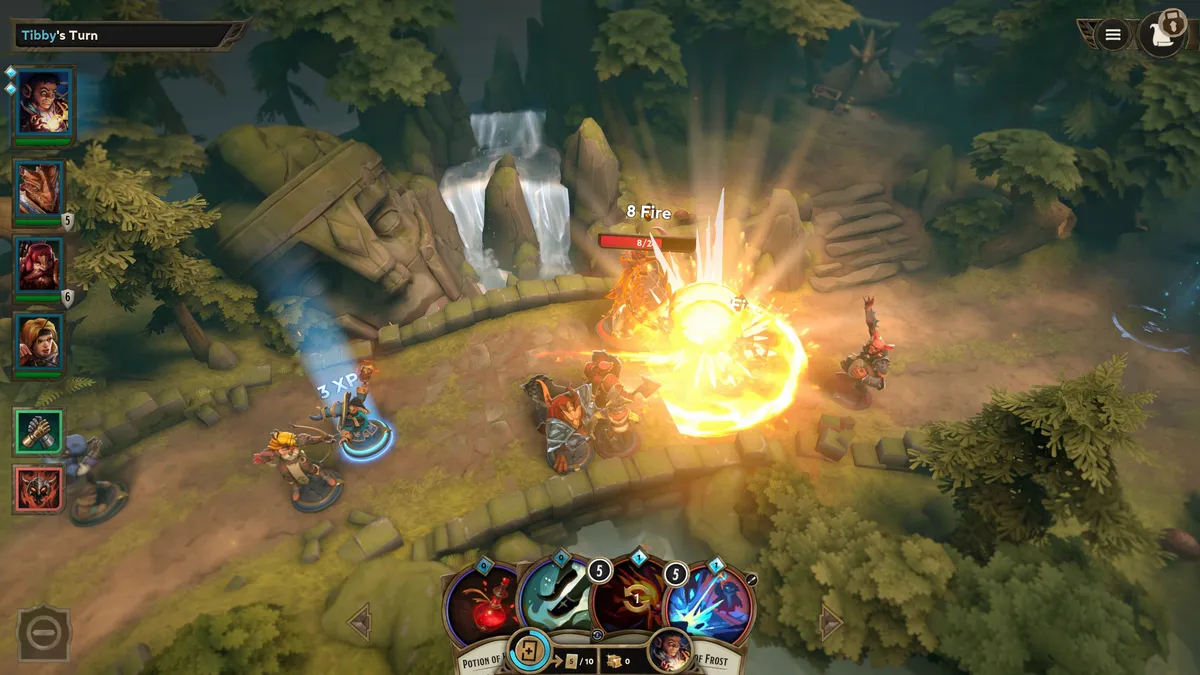 Battlemarked is a new game from the developer of Demeo, a turn based strategy game with coop, now with a D&D coat of paint. The aesthetic of a table top with minis works phenomenally well for anything D&D, and Battlemarked is a pretty attractive game all considered. Gameplay is pretty straight forward, with character having limited action economy they can use on basic move or attack options, or by burning a resource (expressed as a card) to use a special ability like casting a fireball, using a potion, or dashing around the arena.
All considered this seems good. It’s not using a full D&D ruleset, but the tactics gameplay is pretty fun despite the simplicity. The full release promises multiple campaigns and seems to be riffing on tabletop adventures, which all sounds great. My only concern really is that the demo wasn’t sufficient to really get a sense of how the story will be, and any sort of RPG mechanic was disabled for the demo.
If you like strategy games and really want to play a game with a friend, this seems like a fair option. Demeo seems to have been reviewed well and D&D elevates the aesthetic.
Earth of Oryn
Another medieval city builder. If you’ve played your Kingdoms and Castles or Banished or whatever else, you’ve played this game. I tend to enjoy them, but not as much as some. To be honest, from the demo, it wasn’t clear to me what Earth of Oryn was doing that was setting it apart. I don’t think I encountered anything that I hadn’t seen before and I would hardly consider myself an expert in the genre. It’s also got what I can only assume are a handful of odd UX bugs given I was constantly told I have both more houses than people and homeless people.
That isn’t to say it’s outright bad. I think the art is nice (though villager models are a bit absurd looking), and I don’t think this is a genre that needs some radical shift in focus or new developments, but given that this is a genre that is fairly well represented and the biggest issue with most of the existing games in the genre is just raw amount of stuff, I’m not sure Earth of Oryn is offering anything novel. It has missions? I guess that’s a bit different from the usual.
If you’re in dire need of a new coat of paint for your survival city management game, go for it, but otherwise you can pass.
Eurekas
A city management/god sim strategy game with survival elements. Like a lot of the other games in this genre, it feels familiar but does actually do a few things differently. On one hand, leaning further into being a god sim means that the game has a greater focus on macro objectives. In this case, it’s capturing magical foci before your NPC opponents. It feels like a half way point between your typical recent indie city builder like Kingdoms and Castles and a 4X or Civilization game.
That said, the UX is poor and I don’t think all the systems work together just yet. For instance, your settlement is quite small but resources are far flung, so it’s not intuitive how you create a settlement that can actually sustain its pool of resources. By the time you start figuring it out, huge enemy creatures are raiding your base at night and ruining your fun.
Given it’s a solo developer, and the art is pretty nice, I’m giving Eurekas the benefit of the doubt. Not a great experience at the moment, but could be down the line.
Homura Hime
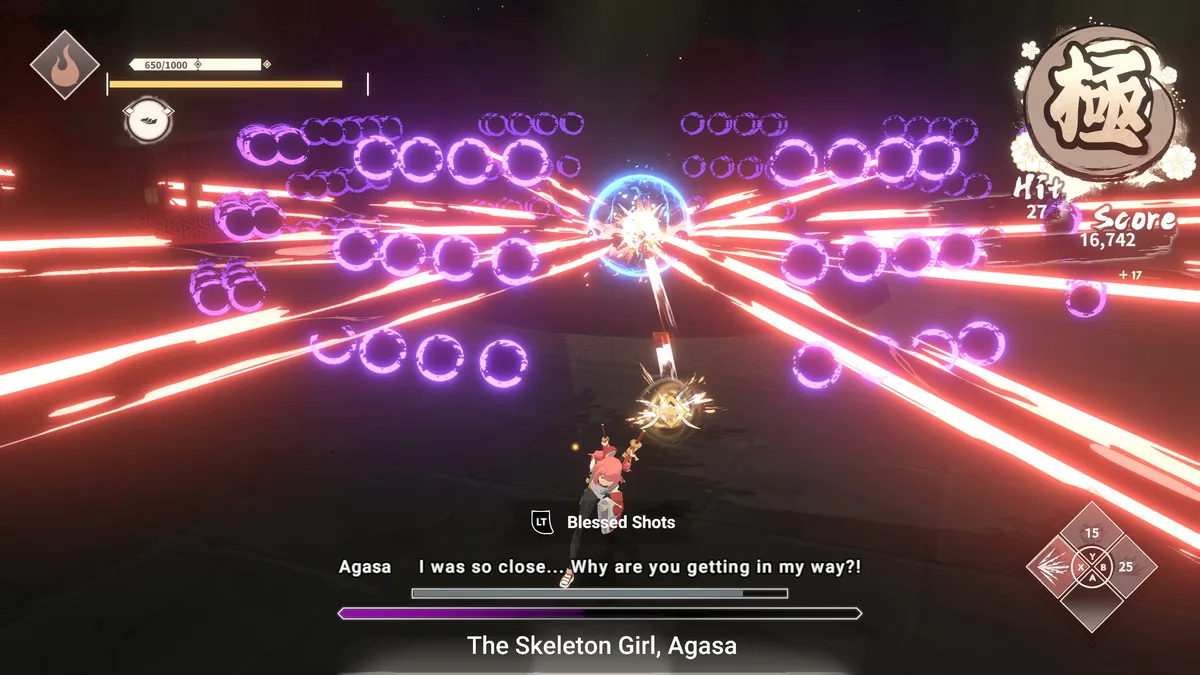 ~60% of a really fun character action game. If you can get passed the extremely tropey anime cast and writing, the model and environmental art work is really fantastic. Gameplay is pretty solid as well, pulling especially from Nier Automata, complete with a pod-esque gun to use against enemies at range. They’re clearly fans of Platinum’s combat design.
Unfortunately, Homure Hime is majorly held back by two things. First, its animation work is fairly poor. More or less any time a character moved, whether in a cutscene or in gameplay, I was a taken out of the experience. There’s a strange feeling of acceleration of your character and the camera being slightly off and I think this contributes to that. Second, combat feel is good but the way hitstop works, and interacts with the parry and dodge, is janky. During the demo’s boss fight I was having a very time differentiating between when I got tagged by something and when I didn’t, and that despite the fact getting hit puts you in a weird float state for ages. Telegraphs felt a bit awkward and inconsistent as well.
Overall, Homure Hime is promising and there will be folks who really enjoy it, but it feels halfbaked currently.
I Am Machine
Hades but now in the future, where robots have taken over due to the folly of man. I feel like I’ve played this game about fourty times, and given not even Hades 2 could get me excited for more Hades, there is no shot in hell I was ever going to be enthused by this. That said, it has pretty strong 2D art, especially the environments are really gorgeous, and some cool comic book-y cutscenes.
Combat feel is pretty poor, as is par for the course with most of these Hades-inspired games. I don’t feel Hades has particularly strong combat personally, and I Am Machine makes the same blunder many of these games do, where enemy telegraphs and player attacks don’t line up very well and leads to either spamming dodge constantly, or being frustrated as enemy attack through your attacks, your attack go over them due to being advancing, or any number of other obnoxious twinstick combat blunders.
Another Hades Clone/10.
Ledgerbound
Ledgerbound is a tactics game that also wants to be a virtual novel or dating sim. In concept, I think I ought to enjoy this one, but in practice what I played here was remarkably tedious. Dialogue lines appear one at a time and there is a shitload of (mostly annoying) dialogue. The character portraits and environments are lovely, but the in-battle sprites look like something straight out of a ‘00s flash game, and something about the whole package just feels a bit confused. It gives me the same feeling as playing a porn game that’s trying to justify its smut with a fairly bad strategy game. Except, as best as I can tell, it’s not a porn game?
I wouldn’t be surprised to see Ledgerbound pop up later and be quite a bit better – it has “Pre-Alpha Gameplay” plastered on the screen and plenty of missing or wrong VO – but for now I think it’s a pass. Maybe someone who enjoys VNs and tactics games more than me would be more tolerant but I can’t be bothered in this state. And all that without mentioning the poor screen controls and lack of UX functionality like opening the options menu in game.
Not for me.
Lyara
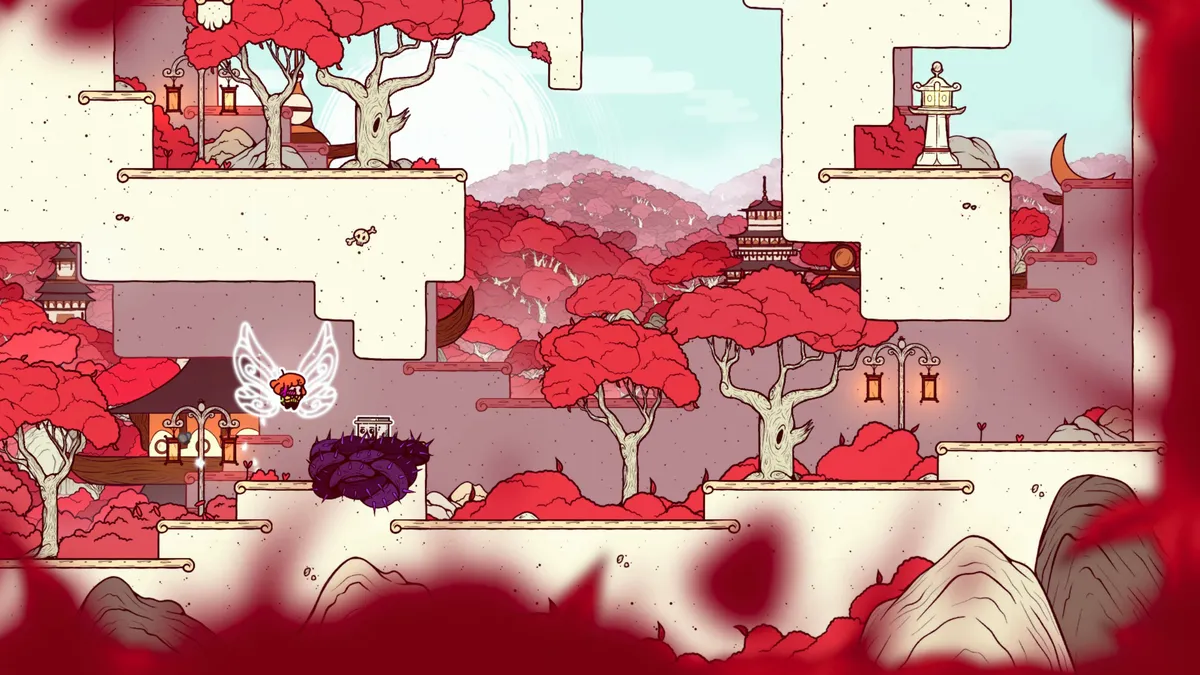 Embarrassingly, I have not played Celeste. That said, Lyara is a Celeste-inspired platformer with absolutely gorgeous hand drawn 2D art, set in China, from a Brazilian developer. The cultural mix on display here is awesome, and the gameplay is pretty strong.
This isn’t really my genre, so I don’t feel confident speaking to the nuances of its comparison to Celeste and other games in the genre, but overall I found the levels pretty satisfying, with many screens having minor puzzle mechanics that feel good to execute on.
There’s currently no English translation for the narrative, but presumably that will come with the full game. Recommend for folks into the genre.
Monsters are Coming! Rock & Road
Monsters are Coming is another arcadey genre mash game, blending tower defense with vampire survivors-esque combat. You defend your castle and build new turrets onto it as it gradually moves south, and you keep enemies off of it while finding new upgrades for yourself and managing both building resources, health, and upgrades. The music is a bit droney after a while, and the clarity of visuals aren’t the best but the art gives a good vibe.
My biggest concerns are just a lack of control – upgrades didn’t come fast enough to feel either my castle or my character were particularly strong or felt as though they were getting stronger. The time management mechanics of collecting resources, killing enemies, and venturing away from the castle to get goodies was fun and I can see the vision there. Just unsure if it’s quite tuned correctly yet.
If you enjoy the concept you’ll probably dig it, but I’m waiting to see how it shapes up with a bit more time in the oven.
Nantara Adventure
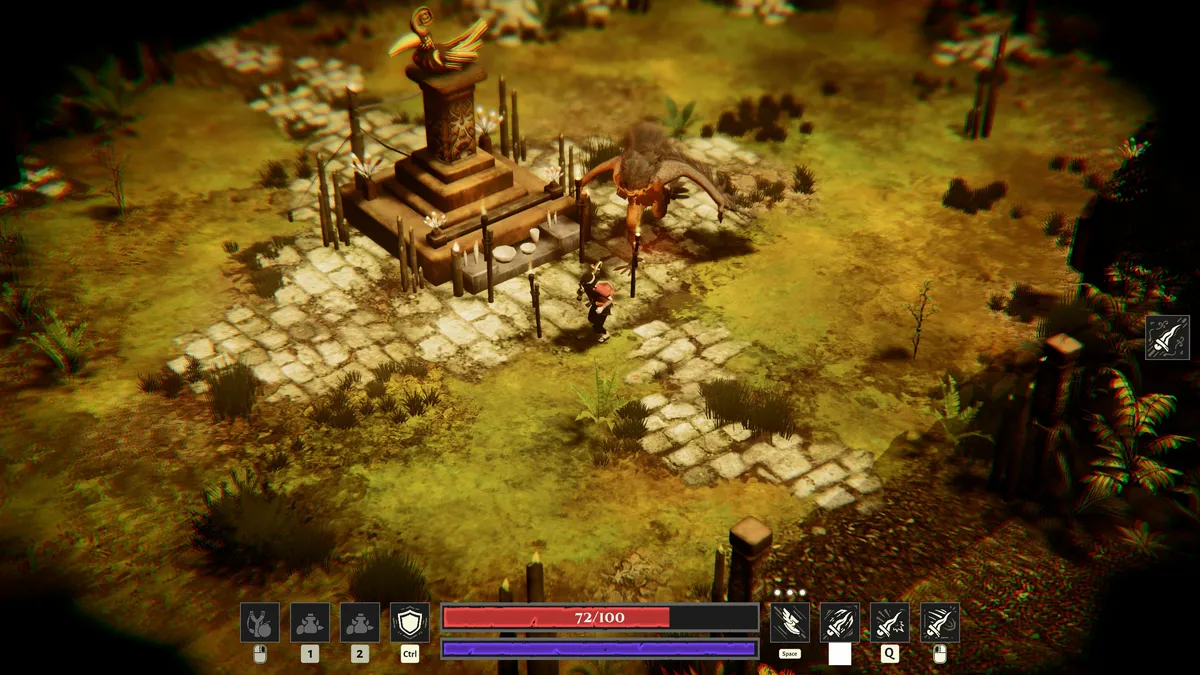 Another Hades-esque roguelike, but this time with a Malaysian dev team and cultural influence. I really appreciate the different culture on display here, and it permeates the art (animation, music, environments, enemy design). That said, I’m not sure the gameplay is as engaging.
Like so many games in this vein, combat feels a bit stiff and sluggish, with enemy animations and player attacks matching up poorly, leading to situations where it feels like you either can’t do anything, or the thing that you ought to do is boring (attacking once and then immediately dodging ad infinitum).
With some work I think there might be something here, but it’s going to be pretty difficult for Nantara to actually succeed in such a saturated subgenre.
Oh! Robot: Legendary Mechanic
Twinstick shooter with a strangely out of place anime motif. The gameplay in the demo emphasizes rotating through four different weapons, none of which feel particularly satisfying or interesting. Hordes of enemies spawn in over time, and your reward for defeating them is random pick ups and then a bit of uninteresting story afterwards. I think it’s trying to be a twinstick version of something like EDF or Helldivers, but it doesn’t really evoke the same goofy joy.
I think the twinstick shooter portion of this could end up being pretty good with a fair bit of iteration, but I really don’t understand the purpose of the whole anime girl aesthetic and narrative. I get the venn diagram of ‘people who like big robots’ and ‘people who like anime girls’ is nearly a circle, but I don’t think it’s serving anyone here, and the ‘story’ resets after every death as if it’s a roguelike or an arcade game you need to 1CC.
This is another one where I just don’t quite see the vision, though I will mention a friend enjoyed it quite a bit more than me. YMMV.
Ricochet Abyss
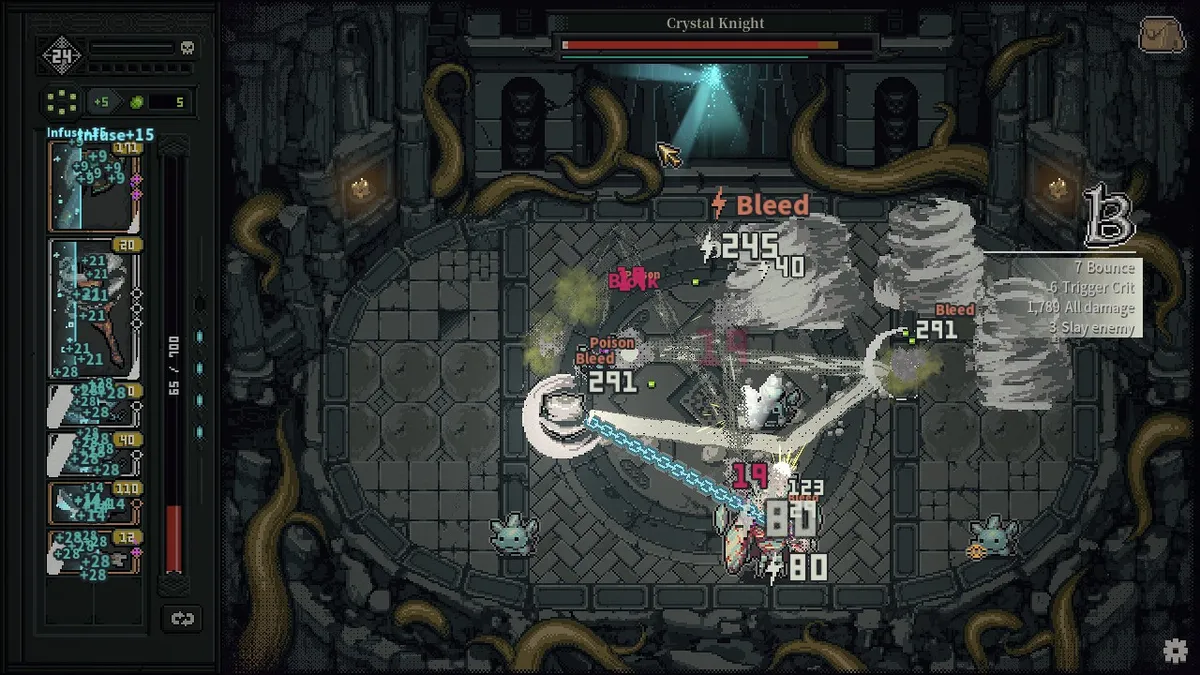 This is a minigolf/billiards-esque inventory management roguelike? It’s like combining the physics of minigolf or billiards games with the The Bazaar’s inventory management system. Items impact each other, queue up their abilities as you ricochet off walls and enemies, and that creates chains of effect. Despite finding most of these inventory management roguelikes pretty obnoxious, I think this one has a sufficiently novel hook to be worth paying attention to.
That said, it seems to be in its infancy. The art is gorgeous, but the UX and translation is clearly not finished. It’s hard to anticipate just how polished this will be (I think the developer is from China, so translation quality will be a standing question), but if they can shore it up and deliver a focused package with this art and gameplay concept, I think it will have some legs.
Cautiously optimistic, overall. In a sea of roguelikes doing nothing new, Ricochet Abyss does a new thing and that thing happens to be fun!
Rolla
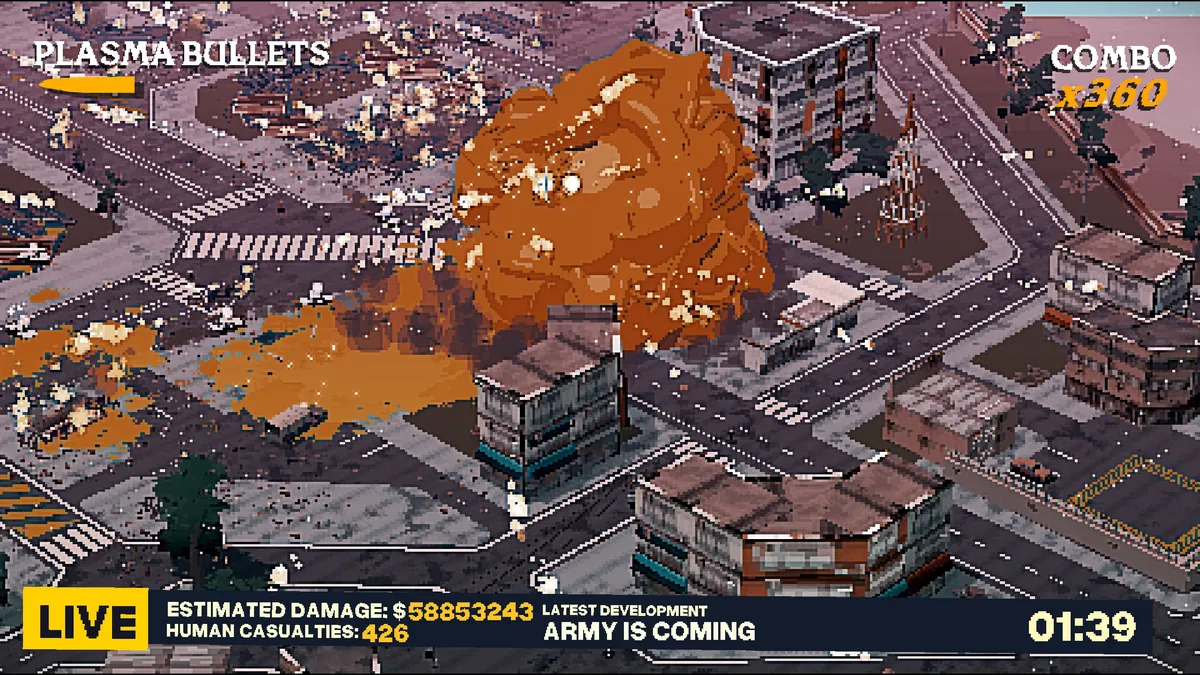 Rolla is like Katamari if instead of a strange quirky alien creating planet, you were a writhing ball of ooze that consumes cities (and all the people in them). The demo is small, but the concept is fun and definitely shows promise. The basic gameplay flow is simple and balances a sort of bullet hell (when you’re small) with a game of chicken (when you’re big) trying to race to either dodge enemy bullets or run over enemies themselves before they can shoot you. The ramping difficulty is manic and adds to that flow.
On the other hand, its visual language is a bit difficult to parse and the news footage motif is thematic but means you need to navigate a menu to see your objectives (and those menus do not play very well on a controller). Those issues aren’t compromising, but it shows that Rolla needs a bit more time in the oven.
Promising and fun, but needs a bit of TLC yet.
Runeblight
Runeblight is a cross between a fantasy boomer shooter in the vein of Hexen, crossed with Dark Souls. Levels are fairly light on enemies, with an emphasis more on exploration and resource management than crowd control. RPG systems pull almost entirely from Dark Souls, with a resource lost on death that’s used to enhance your skills. The game also uses a bonfire equivalent. It wears its influences very much on its sleeves.
There isn’t a whole lot about Runeblight that felt completely novel, but I do think there’s some merit to the concept here. I tend to enjoy FPS games with a fantasy bent and weird magical foes, and Runeblight does this well. The levels feel a bit simple but not bad – appropriate for the start of the game.
Runeblight will have fierce competition with retro FPS games being a popular indie genre in recent years, but I think the Dark Souls DNA could end up making for a fun game.
The Seance of Blake Manor
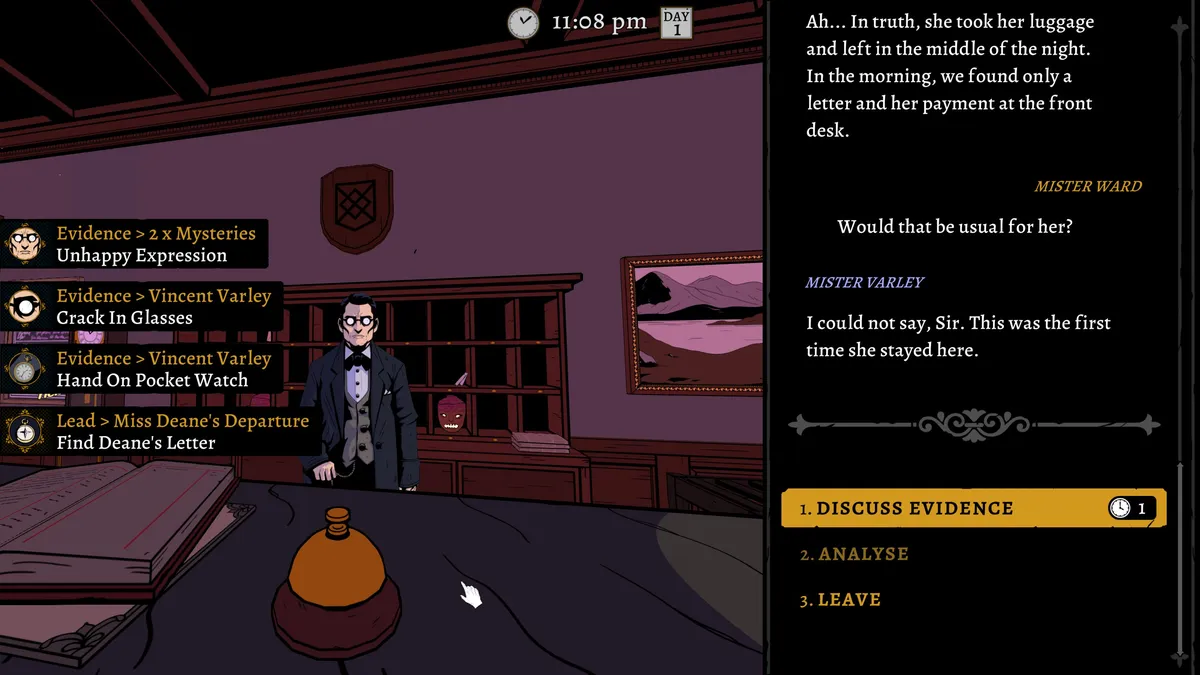 This is an interesting one. The Seance of Blake Manor feels much more put together than most of the games I’ve played this NextFest, with strong art direction, a clear vision for concept and gameplay, and only a couple bugs that I encountered. It pulls from gothic horror and does so very well in terms of its tone, art and gameplay.
However, I found playing Seance a bit frustrating. The various tools for putting together clues and organizing your (the inspector’s) thoughts are phenomenal, the feeling of snooping around the manor uncovering odds and ends is great, and the time management is a interesting way to create tension. Unfortunately, I think the time mechanic and the instant failstates that Seance uses to communicate you’ve erred, are a bit too harsh for what the game is. Failing and redoing puzzles isn’t particularly interesting since they seem to be deterministic, and when a situation isn’t adequately explained (say, you hear something but it’s not obvious if it’s coming from the room next to you) it can mean retracing steps just to make a decision that seemed obvious now that you know what you didn’t before. I fear that would lead to a lot of quick saving just to progress by trial and error, which would really undermine the fantastic tension.
Even if the issue remains I think Seance is one of the strongest games I played here, but I think I would get annoyed with the game as it stands.
Tears of Metal
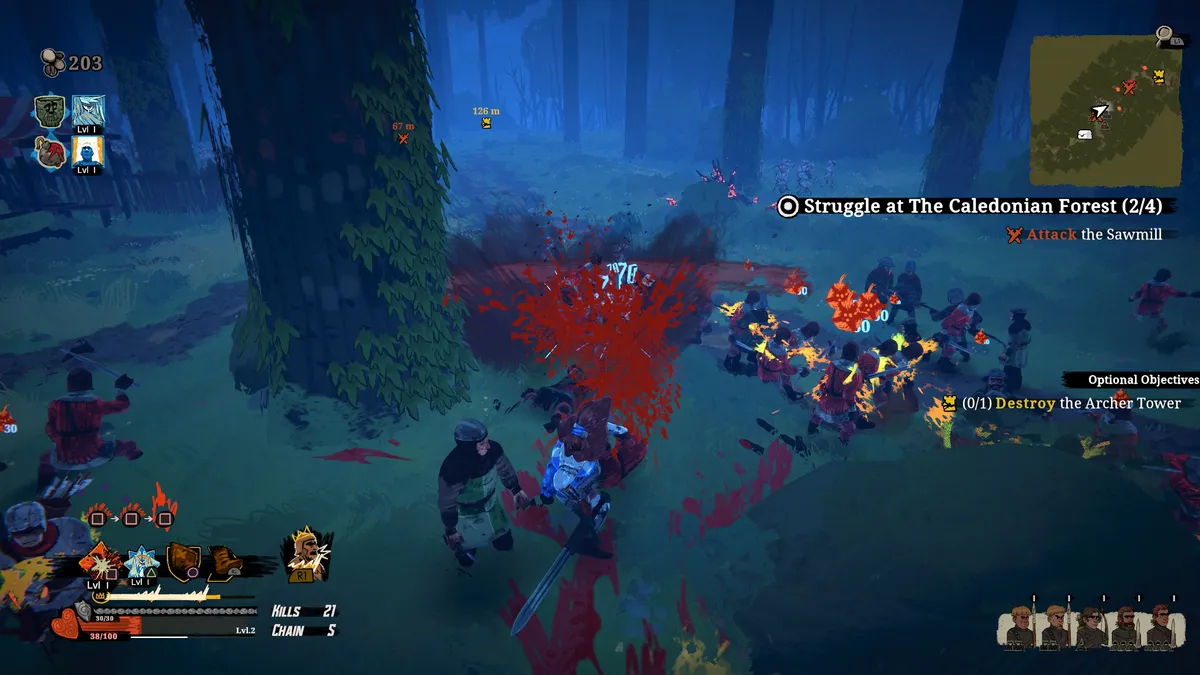 Scottish independence musou isn’t really something I had on my bingo card, but damned if it doesn’t work well. Tears of Metal is an army vs army action game, with roguelite-styled campaigns. Gorgeous stylized graphics, quality chunky combat feel, and a lovely Scottish folk metal soundtrack all come together to create a real awesome harmony. Meta progression comes from upgrading your army and home base of operations, you can recruit or promote soldiers, and the game promises a range of main characters to play. You can tell that the devs had a crystal clear vision for what they were making.
To be frank, the only major gripe I have is that it’s a damn roguelike. A more deliberate progression of levels would have served this well, but Tears of Metal is clearly making efforts to make the game feel like a singular procedurally generated experience, rather than a series of unrelated incidents. It has more of a Darkest Dungeon feel than Hades or Slay the Spire*, and that serves it well. Aside from that, just from UX issues that seem very likely to be ironed out.
Super promising, and anyone who’s ever been intimidated by the endless list of titles in the musou series would be well served starting here, I think. My stand out for this NextFest.
Terror: Type ALCHEMY
Terror: type ALCHEMY is a funky one. It feels like a mix of Arx Fatalis and Thief, with a healthy dose of esoterica. Low poly art and a somewhat overbearing CRT filter set the tone well. The main hook is a crafting system that asks you to blend resources and a drawing-esque system similar to Arx’s spellcasting system.
I’m always happy games like this exist. Immersive sims are a fantastic genre that allow for very weird and systemic games, though what’s in this demo didn’t fill me with a ton of confidence about Terror’s playability. Controls are fine but the menu is cumbersome, UI is opaque, and the crafting system feels a bit tedious.
I’m interested to see where it goes. Wouldn’t be surprised if this ends up being a cult classic some years down the road, but I also wouldn’t be surprised if it faded to obscurity.
Tiny Isle
A cute little plant-themed idle game from another Chinese developer. Charming graphics and audio design work well, and while these sorts of clicker/idle games aren’t exactly riveting, I think this one manages to find a nice balance between an appealing aesthetic, lots of choice in terms of idle vs clicking, and simplicity. I’m not sure it’ll be winning any awards but it does what it sets out to do well.
That said, it isn’t without issues. The translation is a bit rough, and the UX seems better suited to a mobile touch interface than a desktop. Graphics settings are all but non existent (the only meaningful graphical setting is a toggle between full screen and windowed), and the click to hold controls for moving things around doesn’t feel great in a game where spam clicking is a core mechanic.
Does what it promises to do, does it pretty well. It gave me a relaxing thing to do on the side while reading.
...And that's it! NextFest is the best thing Valve has done in years, I really encourage folks to check out some demos whenever they come around.